The Back Yard
A better place to sit. Some math, a lot of digging, and a few things I probably should have done in a different order.
01The starting point
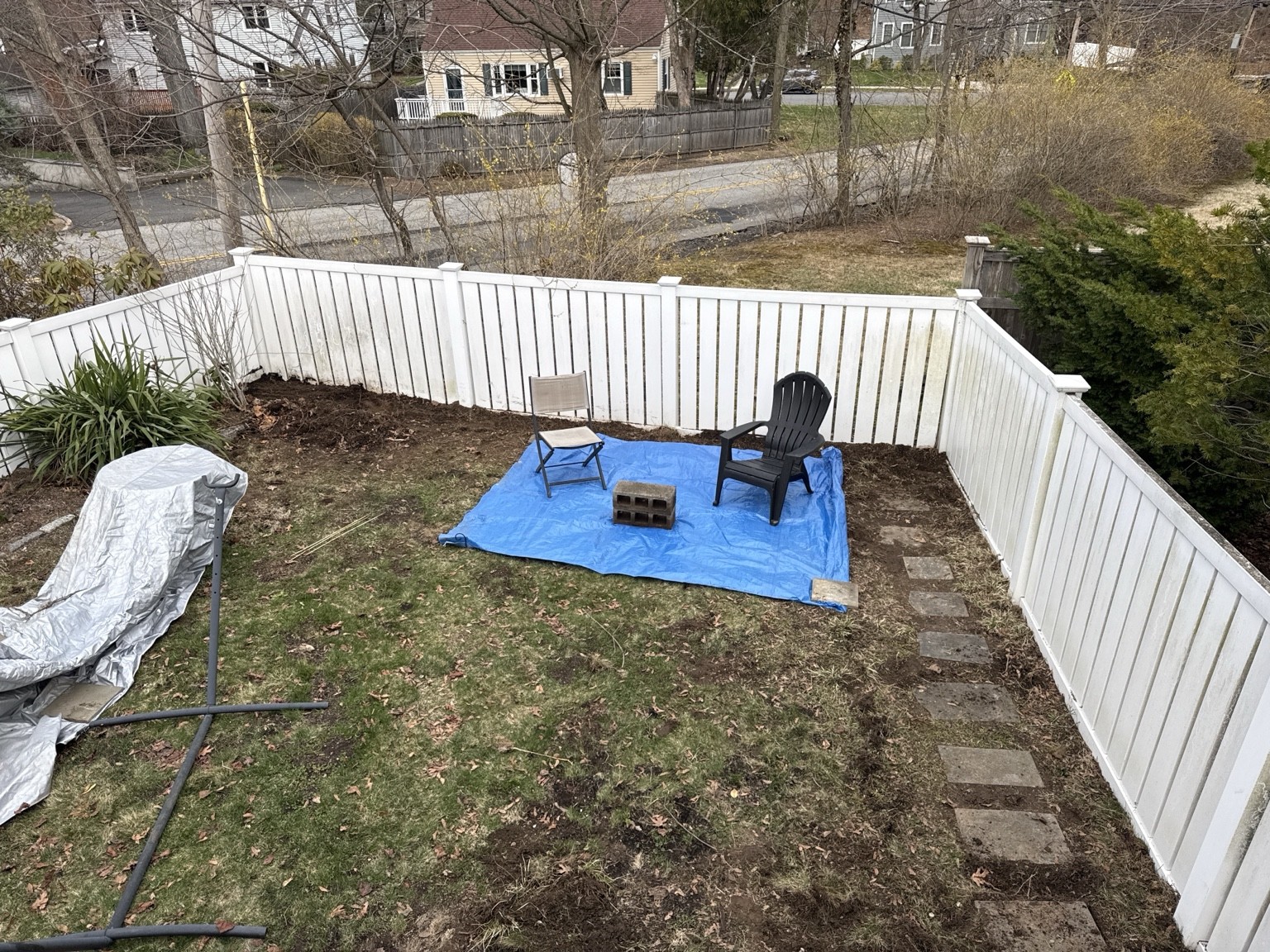
was a piece of shit
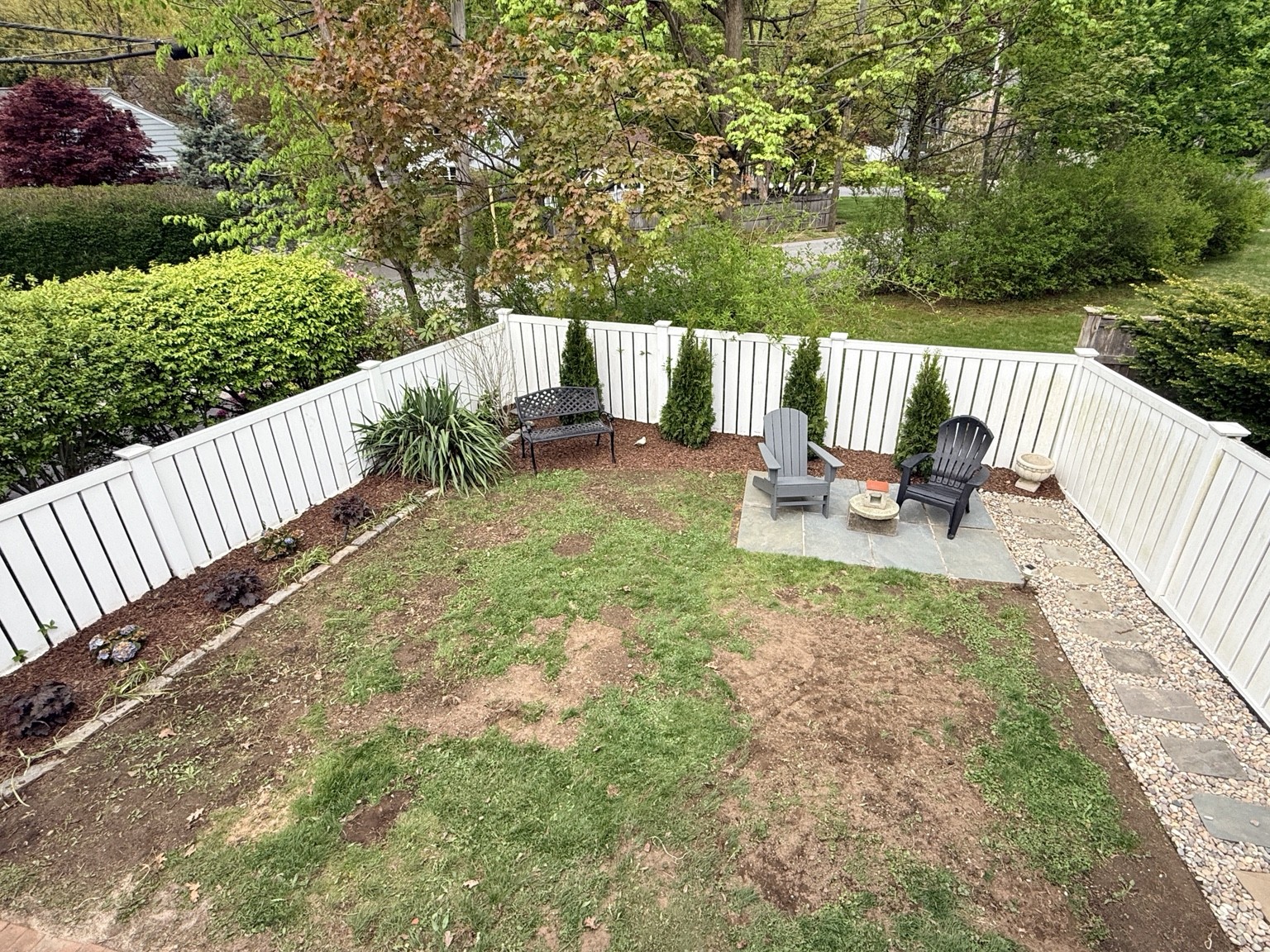
The backyard had an old, broken, rusted firewood rack sitting on half-buried concrete blocks. The stepping stones leading to it were disappearing under the grass. It was a destination, technically. Just not one I wanted to spend time at.
There was useful material already there. I just had to uncover it and find a better purpose for the space.
02Two different
ways to be outside
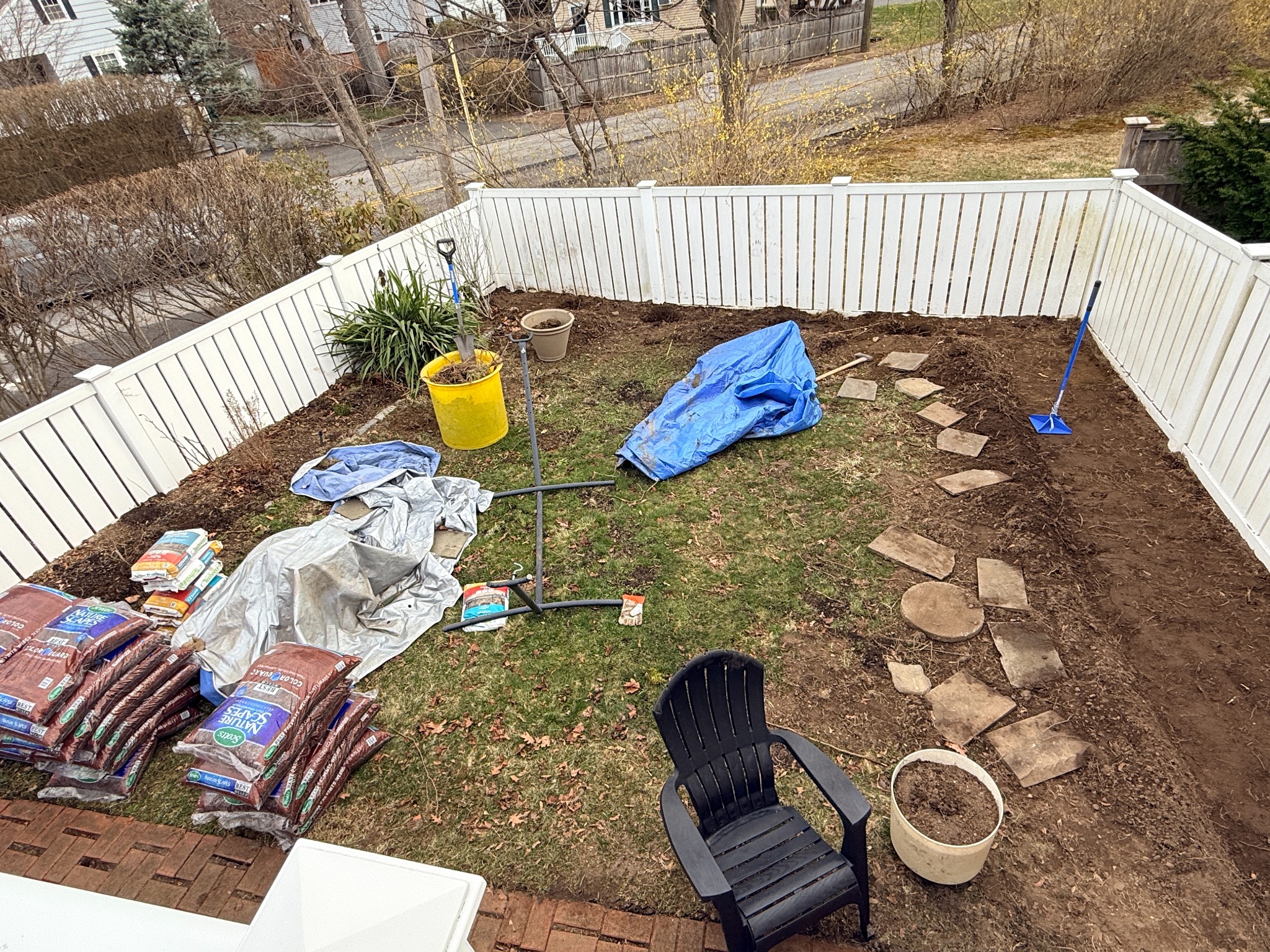
The wraparound deck already had a job: grilling, dinner, and socializing. I wanted a second place, a little apart from that activity. A more enclosed, intimate corner for two people to sit with a glass of wine or water and share a quiet moment.
The plan was a small stone patio, two chairs, a table, and a path to get there. Planting along the fence would help make it feel like a place of its own.
03Math and
sketches
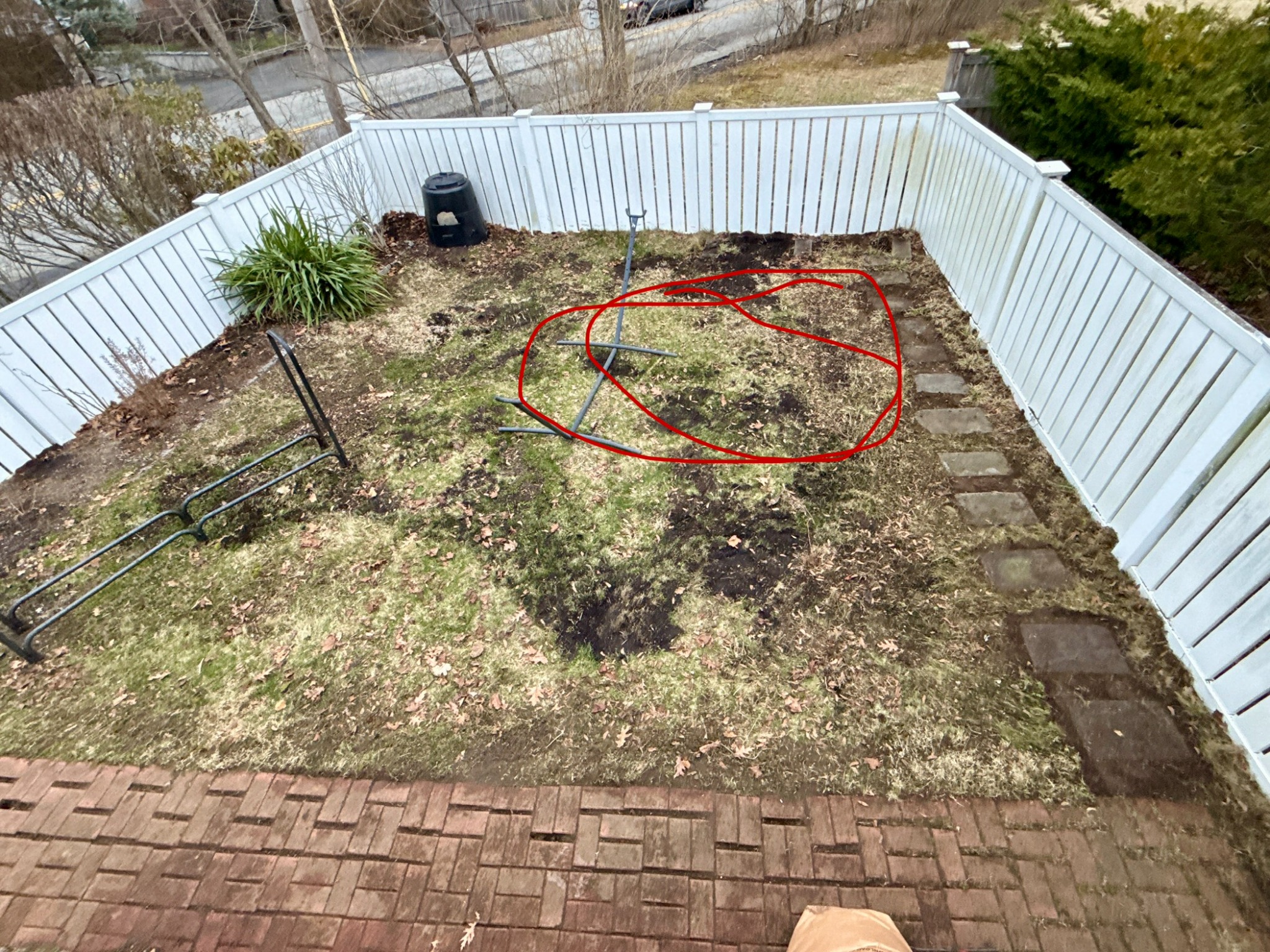
I worked through the measurements and sketches with AI. The patio plan was about 6 by 8 feet: enough room for two chairs and a small table, without turning the whole yard into paving.
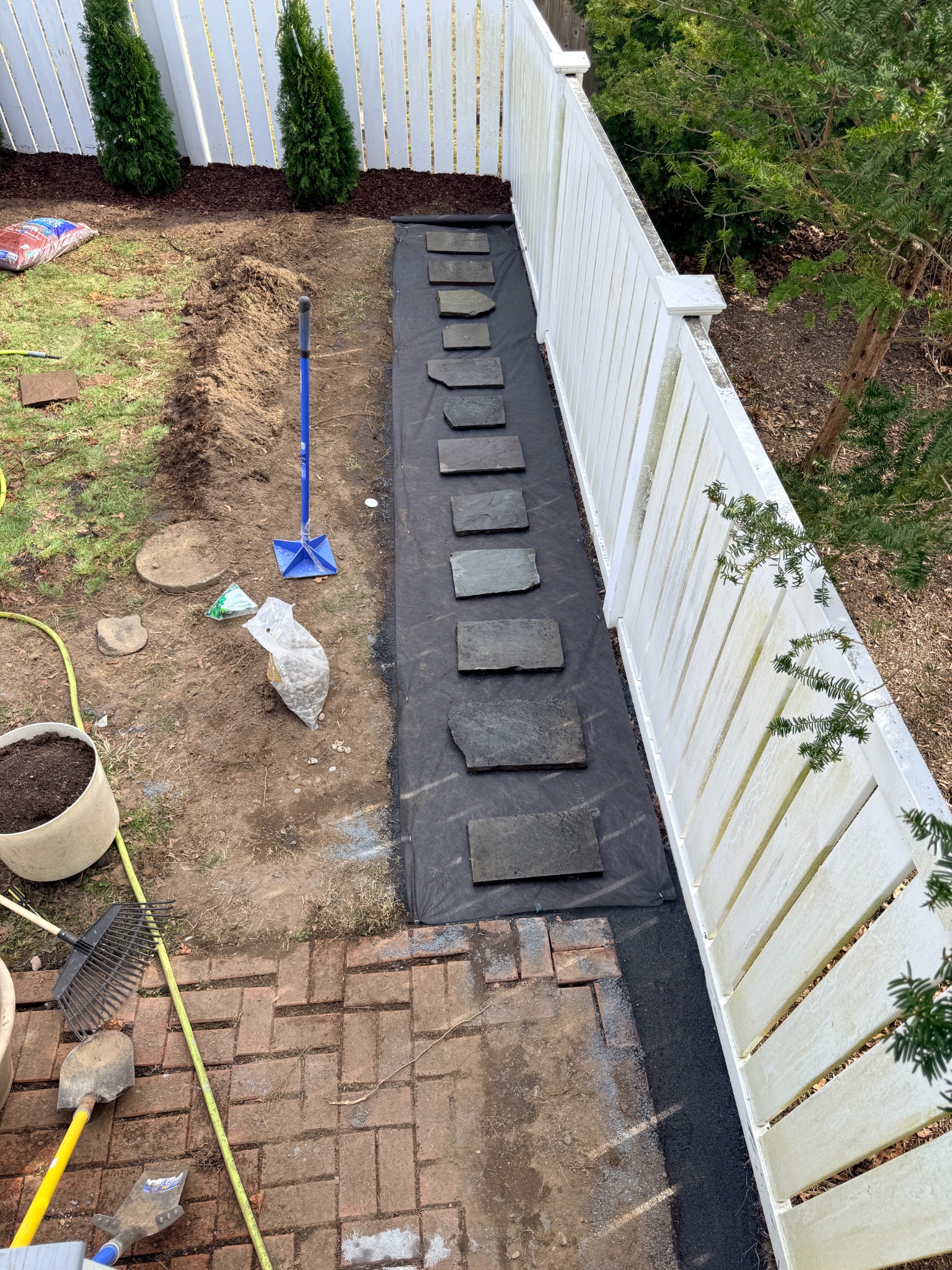
The main path measured 226 by 40 inches, roughly 63 square feet. A narrower strip measured 296 by 10 inches, another 21 square feet or so. Those dimensions turned a vague shopping trip into calculations for base, fabric, and decorative stone.
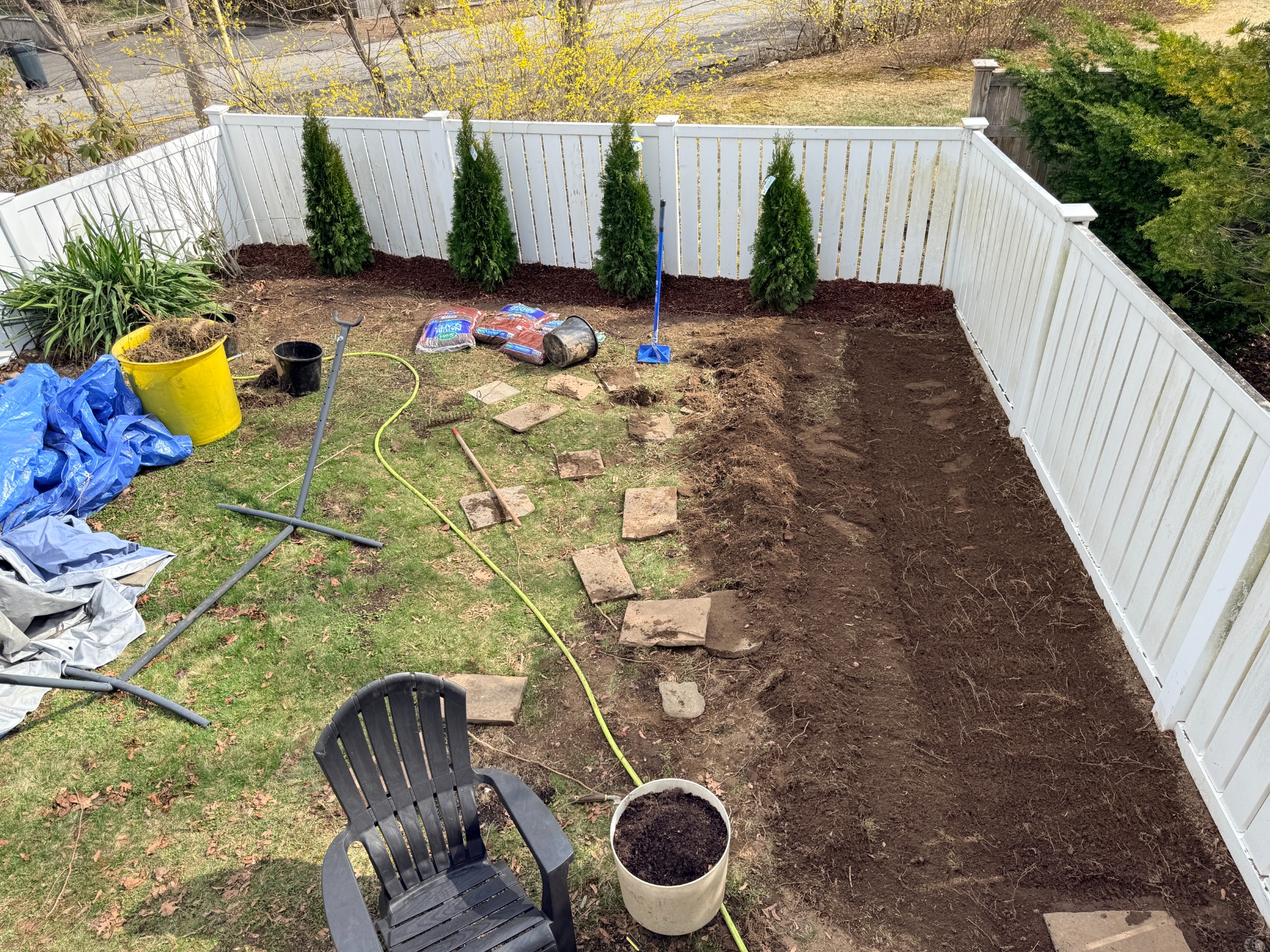
Then there was the actual ground: a downhill slope toward the back fence, existing stones to reset, and roots from the neighboring evergreens. Some of those roots required a hatchet. The sketch was the easy part.
04Ask someone
to build it
I showed the idea to a local guy and asked about getting it done. As we talked through it, I picked up on a lack of confidence about executing the plan.
Explaining that the stepping stones were already there, buried under the grass, seemed to help it click. But I still had to decide whether to hand the project over. I ended up taking it on myself.
05Make the list.
Do the work
I cataloged what I needed, where to get it, and what it would cost: the stone yard, Home Depot, and the nursery. Base, landscape fabric, decorative stone, edging, patio stone, trees, and mulch. Each layer needed a quantity and a source.
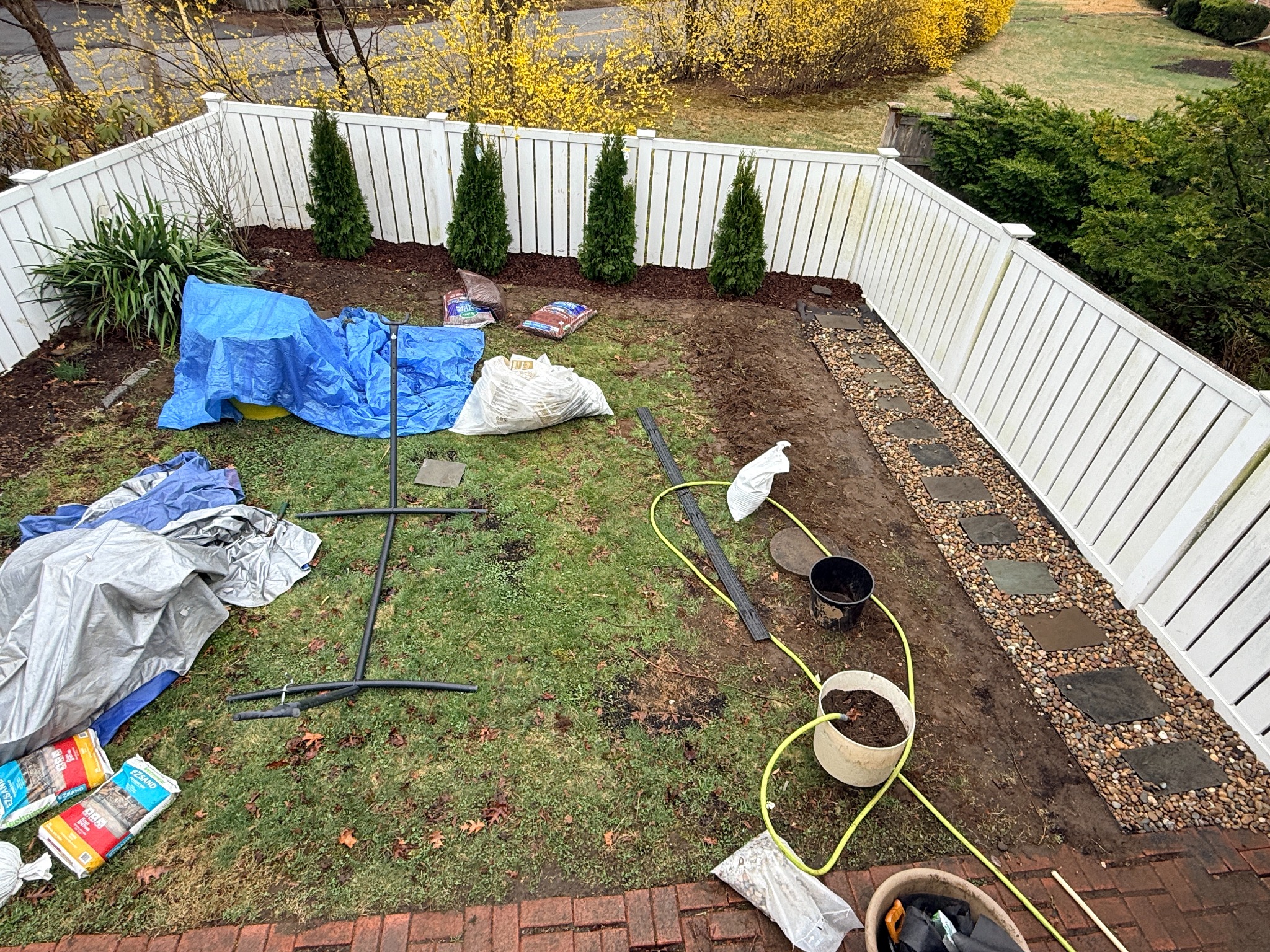
The existing bluestone stepping stones stayed in the plan. I dug them out, prepared the path, and reset them. Reusing the buried slabs gave me something to build around and meant buying less new material.
The nursery helped me choose emerald arborvitae for the fence line. The path, patio, trees, and mulch gradually turned the plan into something I could walk through.
06The stone yard.
And my feet
By this point the stone-yard guys knew me. “Smooth or rough?” They were asking me to choose a finish before anyone had shown me the difference. Rough was $57 a piece. Eight pieces.
Then came moving the stone myself. At one point I nearly crushed my own feet. Material has a weight that is much easier to appreciate when you're holding it. Especially when your feet are underneath it.
The fence wasn't square
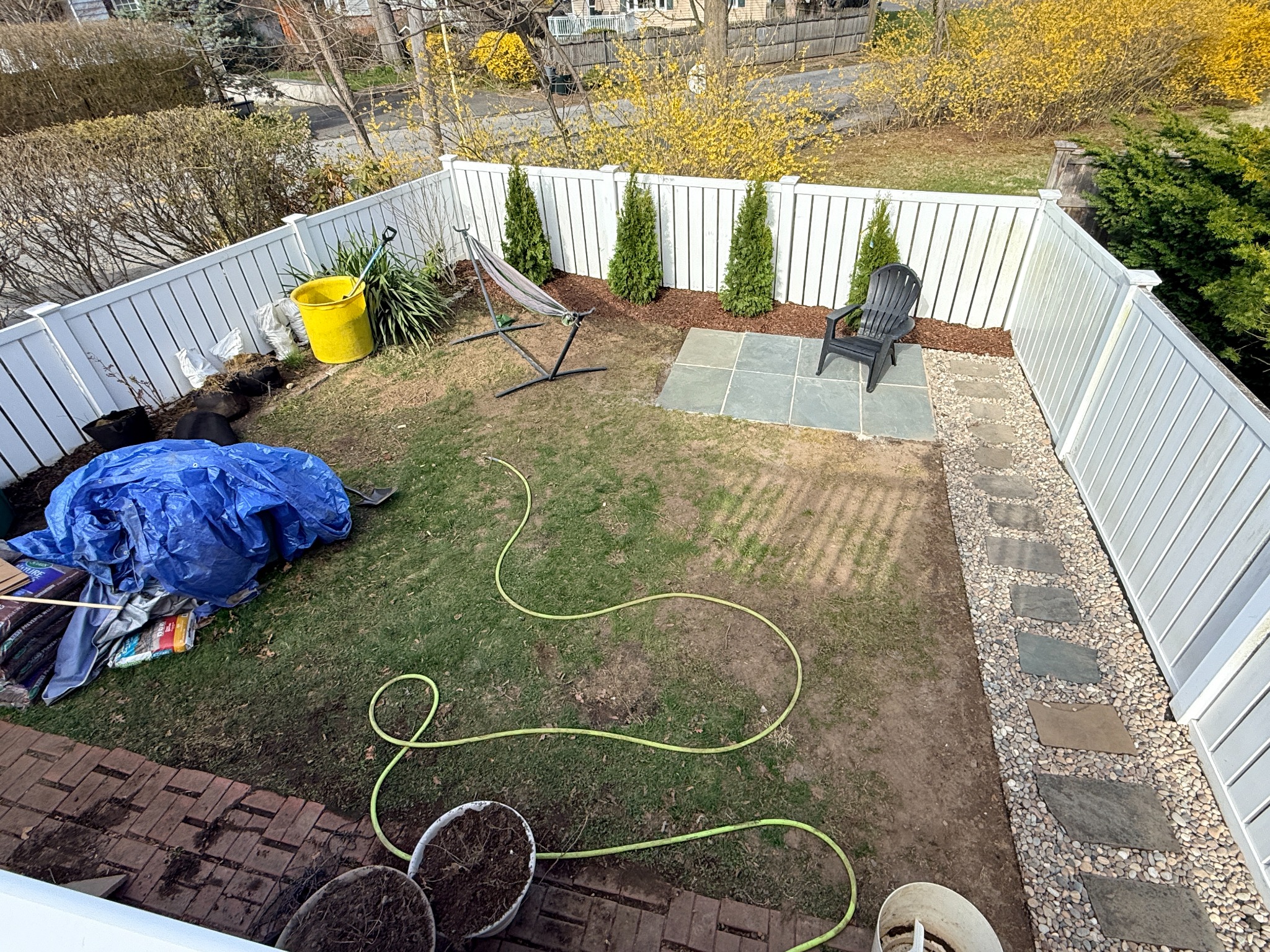
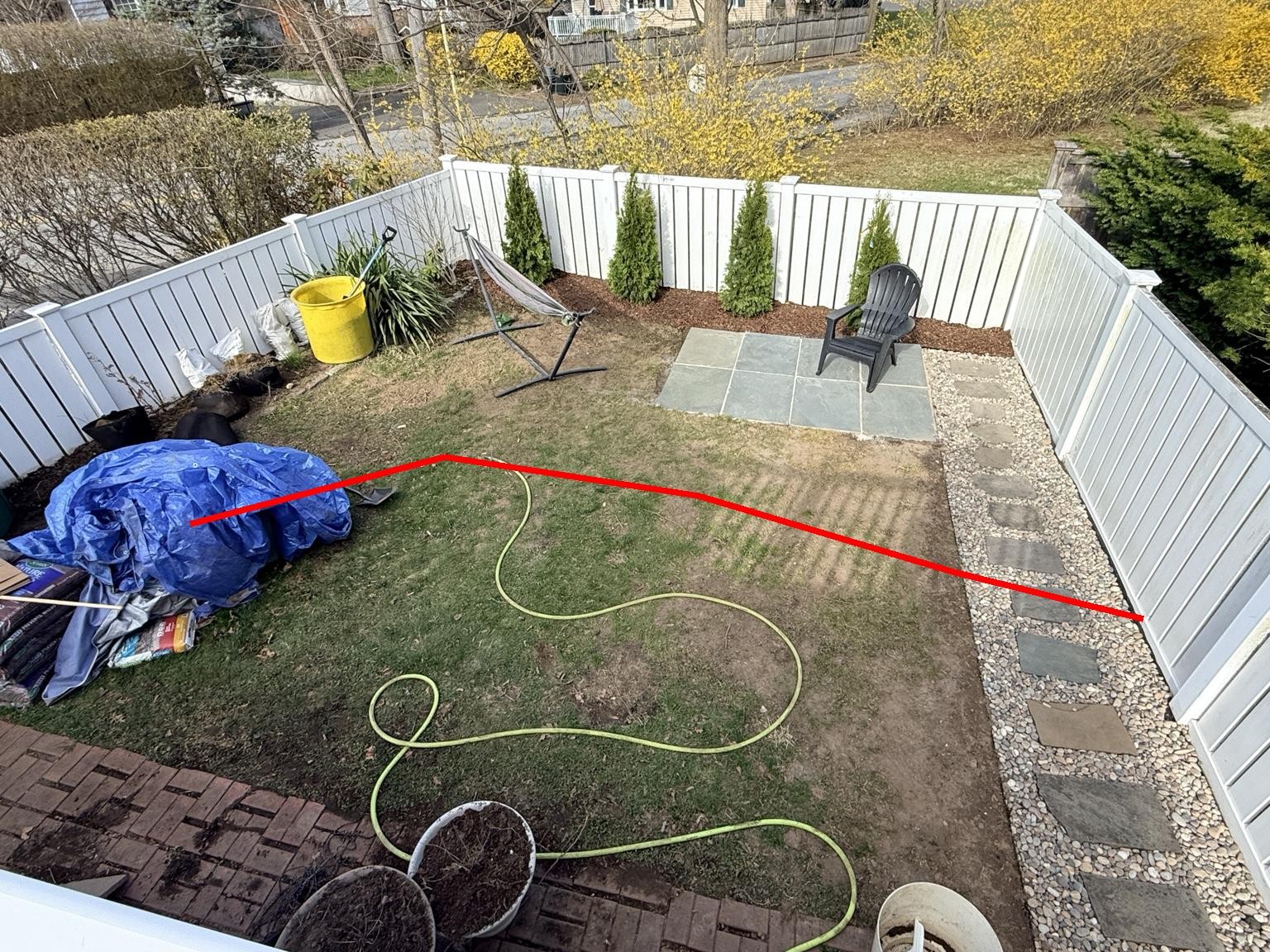
I measured as though it was. It flared out, so my eight-foot-long space was six feet deep at one end and only five and a half at the path. I'd prepared a trapezoid for a rectangular patio. Using the fence posts to hold the string hadn't helped.
The repair plan we worked through was to square the patio independently of the fence and fill the missing wedge with compacted base. One message from that evening: “getting more gravel tomorrow.”
07Done.
Something's off
The pieces were in place, but the yard still didn't quite feel right. I used AI to work through the visual adjustment: bring the mulch farther out, curve its edge, and give the sitting area a small table.
The table solution was already buried in the yard. I reused the cinder blocks the old firewood rack had stood on, with a stone piece on top. The thing I wanted gone had left behind something useful.
The chairs had their own small lesson. I bought another gray Adirondack, but the plastic chair was more comfortable. Looking right and feeling right were two different tests.
08Flowers first.
Power-washing later
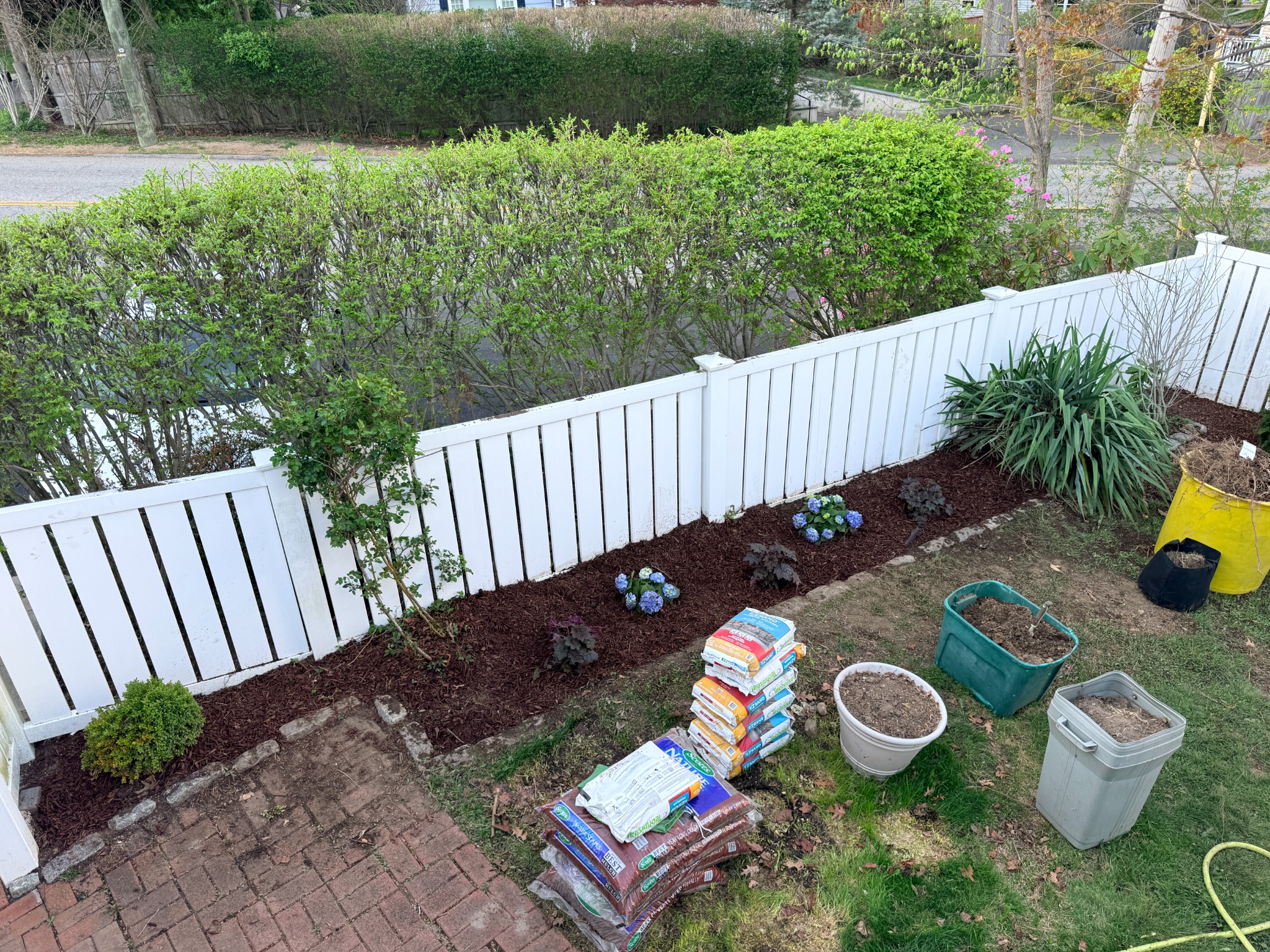
I got the flowers in before power-washing. Oops.
Another part of the plan where the order of operations deserved a little more attention.
09Enter
the crabgrass
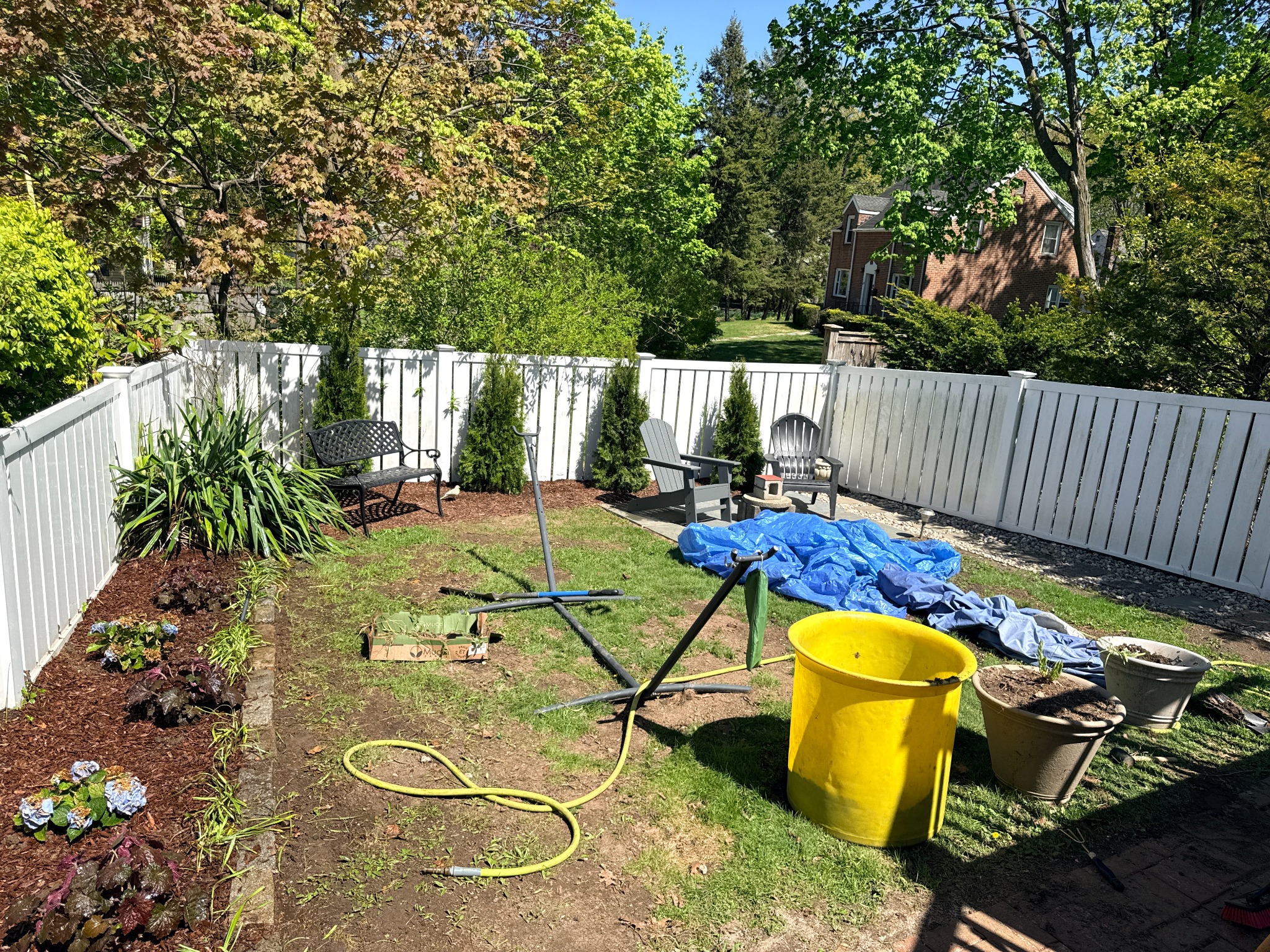
Then I watched the lawn turn into a sea of crabgrass. Like everywhere else.
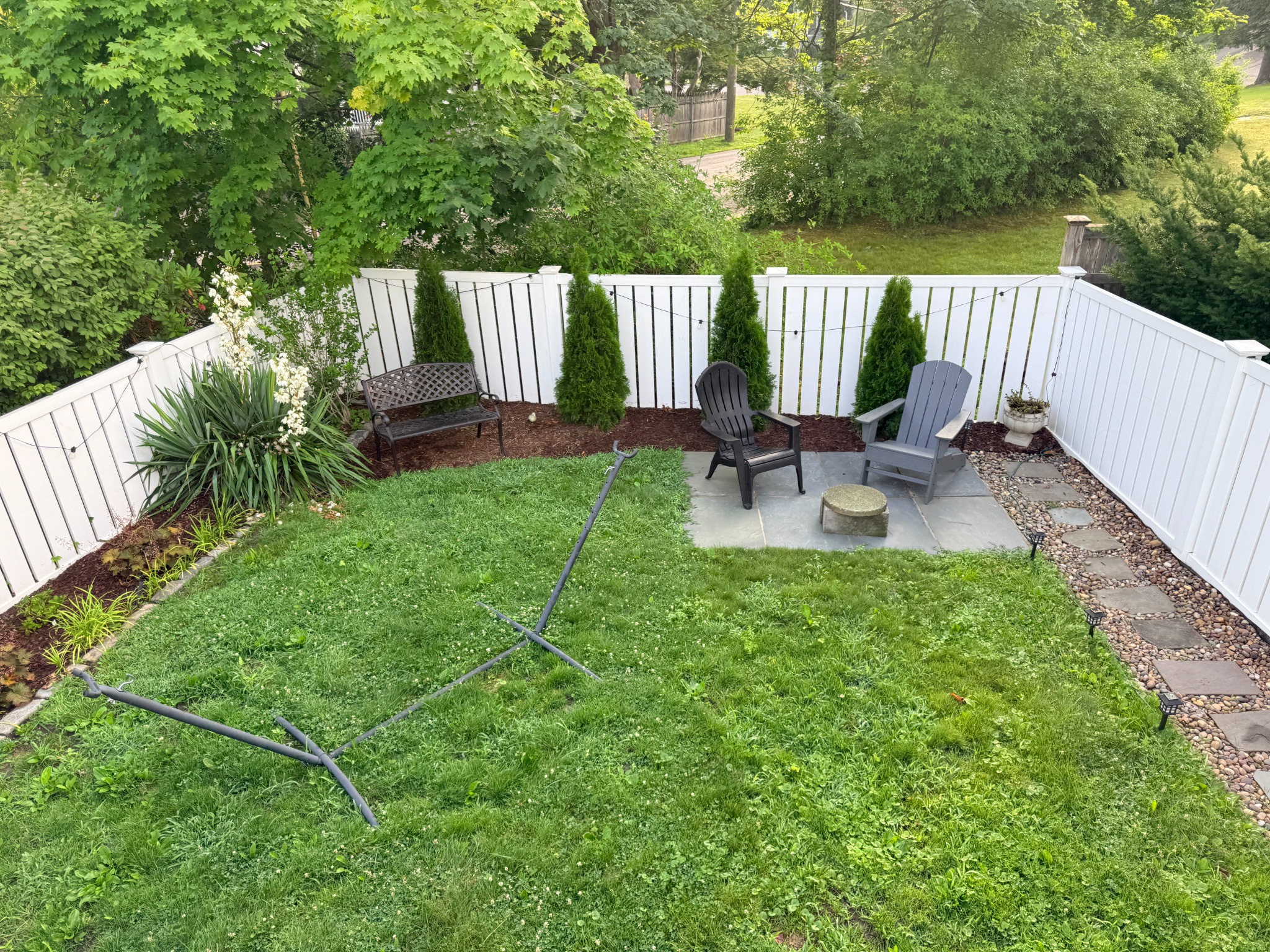
The yard had the quiet sitting area I wanted, a path that made sense, and materials rescued from the old mess. The grass became the next project.
Materials and tools
The original shopping list, with quantities, sources, and cost estimates. The patio slabs came later. These were planning numbers, not a final record of spending.
Open the materials and tools list
| What | How much / notes | Where | Estimate |
|---|---|---|---|
| Steel edgingColmet, 8-foot × 4-inch sections | 76 feet; 10 sections. “Buy 1 extra if paranoid.” | Lowe’s | $270 |
| Paver basePavestone / crushed stone base | About 83 sq ft at 1½ inches deep. Order ½ cubic yard in bulk; bundle delivery with the stone. | Bulk delivery | $100–$150 |
| Decorative stone1–2 inch multicolor river rock | ¾ cubic yard; 24–26 bags or bulk. Mixed gray/tan, rounded stone; bulk preferred. | Local stone yard | $50–$180 |
| Polymeric sandQuikrete / Sakrete, 40-pound bags | 8 bags for about 500 sq ft of brick joints; return unused bags. | Lowe’s | $160–$240 |
| Leveling materialStone dust / screenings | 1–2 bags for a thin leveling layer under each stepping stone. | Lowe’s | $10–$20 |
| Landscape fabric and pinsMedium-duty, 3–4 feet × 50 feet | 1 roll and 50–75 pins for the path. | Lowe’s | $30–$60 |
| Tree-bed mulchDark hardwood mulch | Original allowance: a 20-inch × 23-foot bed, about 38 sq ft at 2–3 inches deep. 10–12 bags of 0.75 cu ft, or about 0.3 cubic yard. | Local yard / Lowe’s | $40–$80 |
| ArborvitaeEmerald Green, six-foot container trees | 4 trees, planned about three feet apart. | Nursery | $740 |
| Basic toolsTamper, rubber mallet, level, stakes | 1 set, including a two-foot level and extra stakes. | Lowe’s | $70–$120 |
| String line and stakesMason line | 1 set for the path alignment and long edging runs. | Lowe’s | $10–$20 |
Also on the work list: shovel, rake, hatchet, hand trowel, wheelbarrow, utility knife, broom, hose, flathead screwdriver, wire brush, and a power washer.